WEREWOLVES OF LONDON:
SUPER LEAD SHEET
This classic 1978 song by Warren Zevon is both fun and really easy to get into playing. The chords and song structure are super simple, so that helps to make it accessible for most players.
The interesting thing you'll note as you try to play along with this song is that the guitar part is all over the place - as in he varies his chords and riffs constantly. This sounds great, but makes it so you'll have an odd experience trying to play what he's playing.
Most players will find it far more comfortable to listen closely to the piano part. This part repeats pretty much the same for the whole song. Also you may notice a simple little ornament he sticks onto the chords; it's very cool so feel free to try to hear and play it, but you can simply play the normal chords and it'll sound fine.
The Band: In addition to Mr. Zevon on vocals and piano, this band includes Mick Fleetwood on drums and John McVie on bass . . . as in . . . the founding members of Fleetwood Mac. No wonder the groove is so good! Filling out the band is Waddy Wachtel on guitar, a very prolific session player from that era.
Who Is This For?
Anyone who listens or plays and wants to know this song better. Particularly for chordal players: guitar, ukulele, or piano. The level is pretty easy: know basic major chords, keep time, have enough brain waves left to change your playing when you choose to.
LEAD SHEET
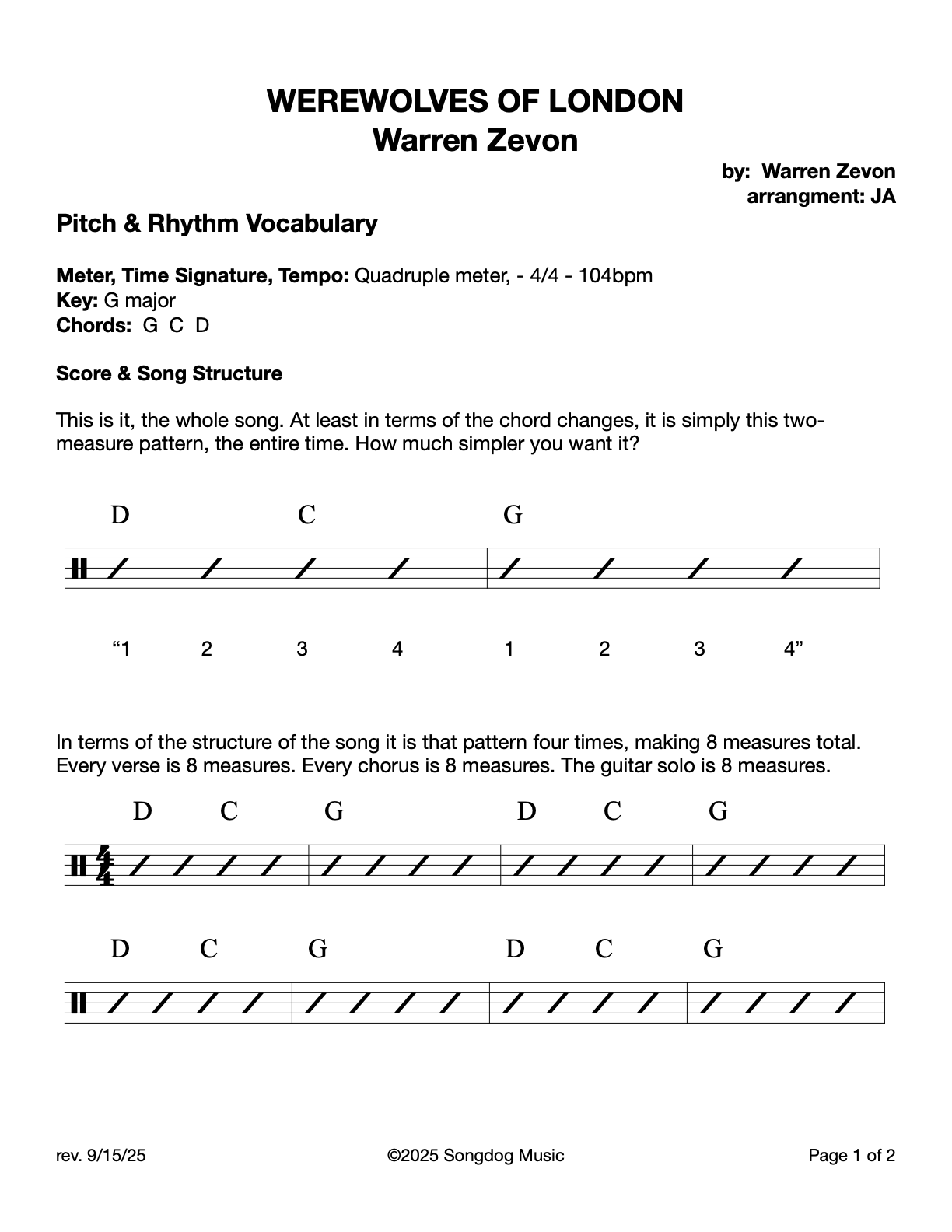
Learning/Playing Strategies
Chords: you can use basic open position chords, they work fine. That will make it sound kind of ‘strummy’. To get a punchier rock kind of sound, you can use power chords. To sound more like the original, use bar chords. There are a couple of little riffs and fills that Wachtel uses consistently; they are worth figuring out, and I'll probably do a tutorial on those at some point in the future.
Strum Patterns: easiest is to simply strum every other beat; on 1 and on 3. Notice that that means you strum the G chord twice. If you want to make that G measure way better, use the Charleston rhythm pattern.
You can make it even more lively by stealing some of the rhythms from the piano part. It involves just adding “the And” of beat 1.
Song Structure: you'll notice that in the lead sheet above I did not write out the whole song. That would have been lame. Why? The thing is only two bars long! Play those two bars four times (pro tip, that equals 8 bars!), and that makes one whole verse. Or one chorus. Or the intro. Or the guitar solo.
It's about as simple as a song can get. This makes it a great song for you to practice memorization!


